

PRP for skin and hair uses platelet-rich plasma prepared from a patient’s own blood. For hair loss, it may help improve hair density and reduce shedding in suitable candidates. Early changes may appear after three months, while more noticeable results can take three to six months or longer. Outcomes depend on the cause of hair loss, treatment plan, and individual response.
Hair thinning can affect confidence, especially when the scalp becomes more visible around the hairline, crown, or parting. Many people consider platelet-rich plasma (PRP) treatment because it uses components of their own blood to support tissue repair and may help stimulate hair growth.
However, PRP before-and-after results are not the same for everyone. Some patients notice reduced hair shedding, while others experience improved thickness or density over several months. The outcome depends on the type of hair loss, the condition of the hair follicles, and the treatment protocol.
At Aesta Aesthetics in Lahore, a consultation can help determine whether PRP is a suitable option for your hair or skin concerns. You can explore the clinic’s aesthetic treatments and services before discussing your individual goals with a practitioner.
What Is PRP Hair Treatment, and How Does It Work?
PRP hair treatment uses platelet-rich plasma separated from a small sample of the patient’s blood. The plasma contains platelets that release growth factors involved in the body’s natural repair processes.
The procedure typically involves three steps:
- Blood collection: A practitioner takes a small blood sample.
- Plasma preparation: The sample is processed in a centrifuge to concentrate platelets.
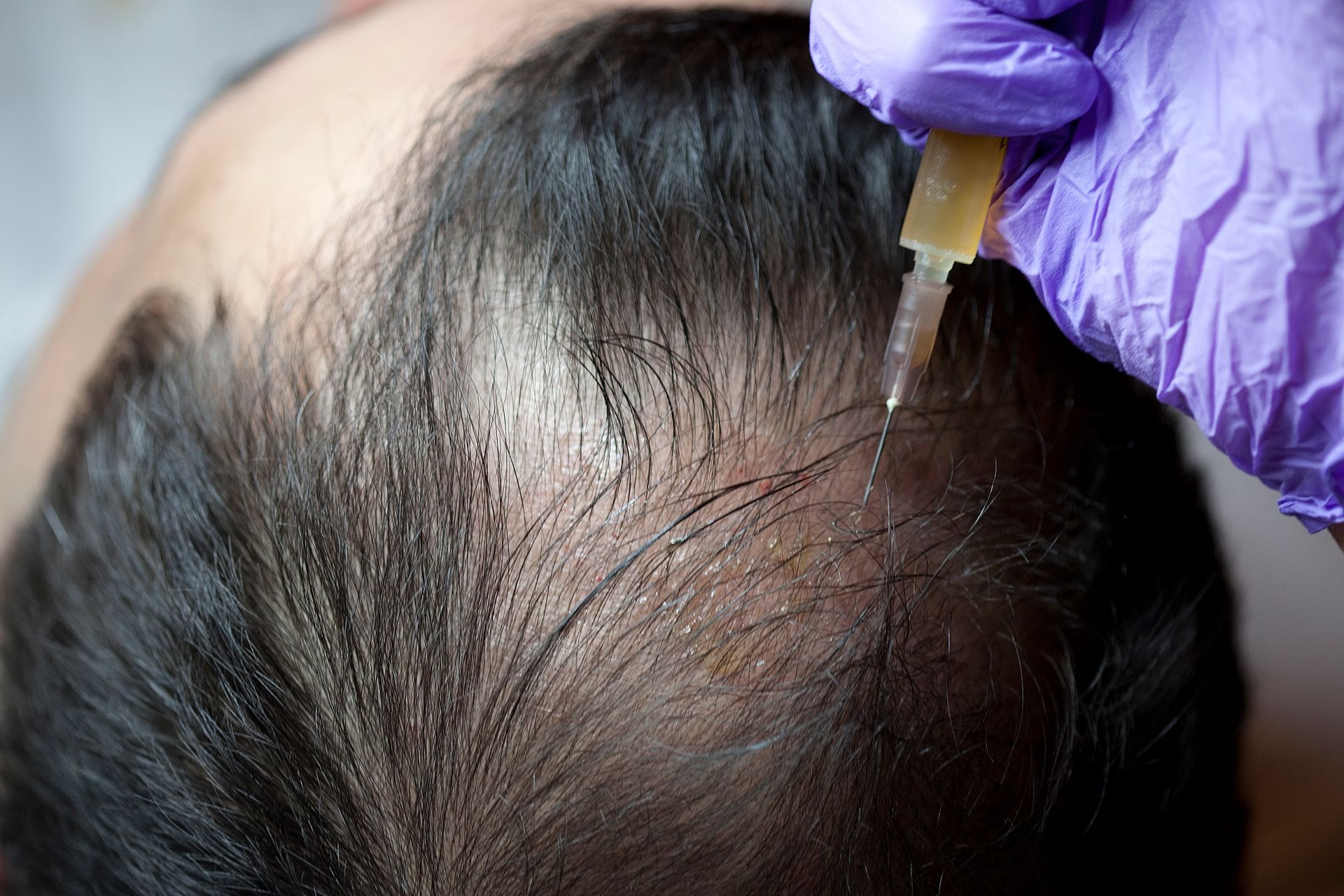
- Scalp application: The prepared PRP is injected into selected areas of the scalp using an appropriate clinical technique.
PRP is commonly considered for certain types of hair thinning, particularly androgenetic alopecia, also known as pattern hair loss. It may support hair density in some patients, but it does not create new follicles where they no longer exist.
PRP is also used in aesthetic medicine for selected skin concerns. However, PRP for the scalp and PRP treatment for the face involve different treatment goals and assessment considerations.
What Do PRP Hair Treatment Before-and-After Results Look Like?
PRP before-and-after results may include less hair shedding, improved hair density, and thicker-looking hair in areas affected by thinning. Changes usually develop gradually rather than immediately after a session.
The following timeline is a general guide, not a guarantee of results.
| Time after treatment | What you may notice |
|---|---|
| First 1–2 weeks | Mild scalp tenderness, redness, or swelling may occur. Visible regrowth is not usually expected this early. |
| Around 1–3 months | Some patients may notice changes in shedding, although results can be difficult to judge at this stage. |
| Around 3–6 months | Improvements in hair thickness or density may become more noticeable in responsive patients. |
| After 6 months | A practitioner can assess progress and discuss whether further treatment or maintenance is appropriate. |
These timeframes vary with the cause of hair loss, baseline hair density, treatment frequency, and individual response.
For a meaningful comparison, photographs should be taken before treatment and repeated at consistent intervals. Use similar lighting, camera angles, hairstyle, and hair length. This makes it easier to distinguish genuine changes from differences in photography.
Important: Before-and-after photographs should represent actual patients and accurately reflect their treatment history. Results from one person cannot predict another person’s outcome.
How Many PRP Sessions Are Needed for Hair Regrowth?
Many PRP hair treatment plans begin with three sessions spaced approximately four to six weeks apart. Some practitioners recommend different schedules depending on the patient’s condition and the preparation protocol.
A maintenance session may be considered every few months or at another interval recommended by the treating practitioner. There is no single schedule that suits everyone, and the ideal frequency is not firmly established.
The number of sessions may depend on:
- The cause and severity of hair loss.
- How long the hair has been thinning.
- The number of active hair follicles in the affected area.
- The patient’s response to initial treatment.
- Whether PRP is combined with other evidence-based hair loss treatments.
A consultation helps establish realistic goals and a review schedule. Continuing treatment without assessing progress may not be useful if the original diagnosis or treatment approach needs to change.
What Is the PRP Hair Treatment Success Rate?
There is no single reliable success rate that applies to every patient receiving PRP for hair loss. Research suggests that PRP may improve hair density in some people with pattern hair loss, but studies vary in their preparation methods, treatment schedules, and outcome measurements.
Results are generally more promising when hair follicles remain active and the cause of thinning is suitable for PRP. Advanced hair loss, scarring alopecia, and untreated medical causes may require different approaches.
Your practitioner may assess progress through photographs, scalp examination, hair density measurements, and changes in shedding. These measures provide a more useful picture than a general percentage or a single before-and-after photograph.
PRP should not be presented as a guaranteed replacement for established treatments. Depending on the diagnosis, a dermatologist may discuss options such as topical minoxidil, prescription treatment where appropriate, or further investigations to identify contributing factors.
What Affects PRP Hair Treatment Cost in Lahore and Pakistan?
PRP hair treatment cost varies between clinics because treatment protocols, equipment, practitioner expertise, and the number of sessions differ.
In Lahore and elsewhere in Pakistan, the total price may depend on:
- Number of sessions: A complete treatment course costs more than a single session.
- Preparation method: PRP collection and processing systems may differ.
- Treatment area: The extent and pattern of hair thinning can affect the treatment plan.
- Clinical assessment: Some patients need additional assessment to identify the cause of hair loss.
- Follow-up care: Review appointments and maintenance sessions may affect the overall budget.
There is no verified, universal PRP hair treatment price in Pakistan. Rather than relying on a single advertised session price, ask for the cost per session, the recommended number of sessions, and the estimated cost of the full course.
If you are comparing clinics for PRP treatment in Lahore, consider practitioner qualifications, hygiene standards, the suitability of the proposed treatment, and how progress will be measured. A low price alone does not establish treatment quality.
Contact Aesta Aesthetics to ask about current pricing and arrange an assessment before committing to a treatment plan.
What Are the Side Effects of PRP Hair Treatment?
PRP hair treatment can cause temporary discomfort and local reactions, even though the plasma is prepared from the patient’s own blood.
Possible side effects include:
- Tenderness or pain at injection sites.
- Temporary redness or swelling.
- Mild bruising.
- Headache or scalp sensitivity.
- Rare complications such as infection or injury to nearby structures.
The risk depends partly on injection technique, preparation, and clinical hygiene. Using a patient’s own blood does not make a procedure completely risk-free.
Tell your practitioner about your medical history, medications, bleeding problems, and any scalp infection or inflammation. Seek medical advice promptly if you develop worsening pain, spreading redness, fever, or other unexpected symptoms after treatment.
Is PRP for Skin and Hair Suitable for Everyone?
PRP for skin and hair may suit people seeking an option for selected concerns, but suitability depends on the treatment area and the underlying problem.
For hair loss, the practitioner should first determine whether the thinning is caused by pattern hair loss, a nutritional deficiency, a thyroid condition, a recent illness, medication, or another factor. Treating the underlying cause may be more important than proceeding directly with PRP.
PRP skin treatment is a separate application. It may be considered for selected skin-quality concerns, but the evidence and expected benefits vary by technique and indication. PRP treatment for the face should follow an assessment of skin health, medical history, and treatment goals.
At Aesta Aesthetics, discuss whether the proposed treatment matches your needs, what improvement is realistic, and whether another option may be more appropriate.
Frequently Asked Questions About PRP Hair Treatment
Does PRP regrow hair permanently?
PRP does not guarantee permanent regrowth. Some patients maintain improvements for a period, while others need maintenance or additional treatment. The long-term outcome depends on the cause of hair loss and how the condition progresses.
Can PRP help with a receding hairline?
PRP may help selected patients with early pattern hair loss around the hairline if viable follicles remain. It is less likely to produce substantial improvement in areas with extensive follicle loss. An assessment can help clarify what is realistic.
Can I wash my hair after PRP treatment?
Follow your clinic’s aftercare instructions. Patients are commonly advised to avoid washing the scalp for a period after injections, often around 12–24 hours, depending on the protocol. Avoid vigorous scalp rubbing and ask when to resume your usual hair products.
Is PRP better than minoxidil for hair loss?

Neither treatment is universally better. Minoxidil has an established role in treating certain types of pattern hair loss, while PRP may offer additional benefits for some patients. A practitioner can explain the evidence, possible side effects, costs, and suitability of each option.
Can PRP treatment be combined with other hair loss treatments?
Yes, PRP may be combined with other treatments in selected cases. The plan should account for the diagnosis, medications, medical history, and treatment goals. Do not stop or change prescribed medication without advice from your treating clinician.
Is PRP treatment for the face the same as PRP for hair?
Both use platelet-rich plasma prepared from blood, but the treatment area, technique, goals, and assessment differ. PRP for hair focuses on selected hair loss concerns, while PRP for the face is used for selected skin-quality concerns. Pricing and expected results are therefore different.
Reviewed by Dr. Nasba Safdar, Aesta Aesthetics.
Disclaimer: Results vary by individual, and this article is not a substitute for a personalised medical consultation.
Book a PRP Consultation at Aesta Aesthetics, Lahore
If you are considering PRP for hair thinning, start with an assessment rather than relying on photographs or advertised success rates. Aesta Aesthetics can help you discuss your concerns, understand the available options, and clarify the expected treatment plan and cost.
Visit Aesta Aesthetics to enquire about a consultation in Lahore.