
PRP treatment, or platelet-rich plasma therapy, uses a concentrated portion of your own blood that contains platelets and growth factors. For skin, PRP may support collagen production and improve skin texture. For hair, it may help support hair growth and reduce thinning in suitable patients. Results vary depending on the individual, treatment area, and underlying concern.
PRP for skin and hair is a regenerative aesthetic treatment that uses components of your own blood to support the body’s natural repair processes. It is commonly considered by people who want to improve skin texture, address early signs of ageing, or manage certain types of hair thinning.
At Aesta Aesthetics in Lahore, understanding your skin condition, hair loss pattern, medical history, and treatment goals is an important part of deciding whether PRP is appropriate. Although PRP uses your own blood, it is still a medical procedure that requires proper assessment, preparation, and aftercare.
This guide explains what PRP treatment is, how it works for the face and scalp, what results you may expect, its potential side effects, and the factors that influence PRP treatment cost in Pakistan.
What Is PRP Treatment?
PRP treatment is a procedure that separates platelet-rich plasma from a small sample of your blood and uses it in a targeted treatment area.
Platelets are best known for their role in blood clotting. They also release growth factors and other signalling molecules involved in tissue repair. PRP concentrates these platelets in a smaller volume of plasma.
The treatment generally involves three stages:
- Blood collection: A healthcare professional collects a small blood sample.
- Centrifugation: The sample is processed in a centrifuge to separate its components and concentrate the platelets.
- Application: The prepared PRP is applied or injected into the selected treatment area using an appropriate technique.
The exact procedure depends on whether PRP is being used for the face or scalp. A qualified practitioner should explain the technique, expected benefits, limitations, and possible risks before treatment.
PRP is not the same as a dermal filler, Botox, or a conventional facial. It does not add immediate volume or directly relax facial muscles. Instead, it aims to support biological processes involved in tissue repair.
How Does PRP for Skin and Hair Work?
PRP for skin and hair works by delivering concentrated platelets and their associated growth factors to a targeted area.
These growth factors participate in cellular signalling and tissue repair. However, the way PRP affects skin and hair differs, and results depend on several biological and individual factors.
How Does PRP Work for Skin?
PRP skin treatment aims to support the skin’s natural repair processes and may help improve texture, fine lines, and overall skin quality.
When PRP is introduced into the treatment area, platelet-derived growth factors may influence cells involved in tissue repair and collagen production. Collagen is a structural protein that helps keep skin firm and resilient.
Potential improvements may include:
- Smoother-looking skin texture.
- Subtle improvement in the appearance of fine lines.
- Support for skin firmness and elasticity.
- Improvement in the overall appearance of skin quality.
Results are generally gradual rather than immediate. PRP is not a guaranteed treatment for deep wrinkles, significant skin laxity, or established pigmentation. The strength of the evidence also varies depending on the skin concern and the technique used.
How Does PRP Work for Hair?
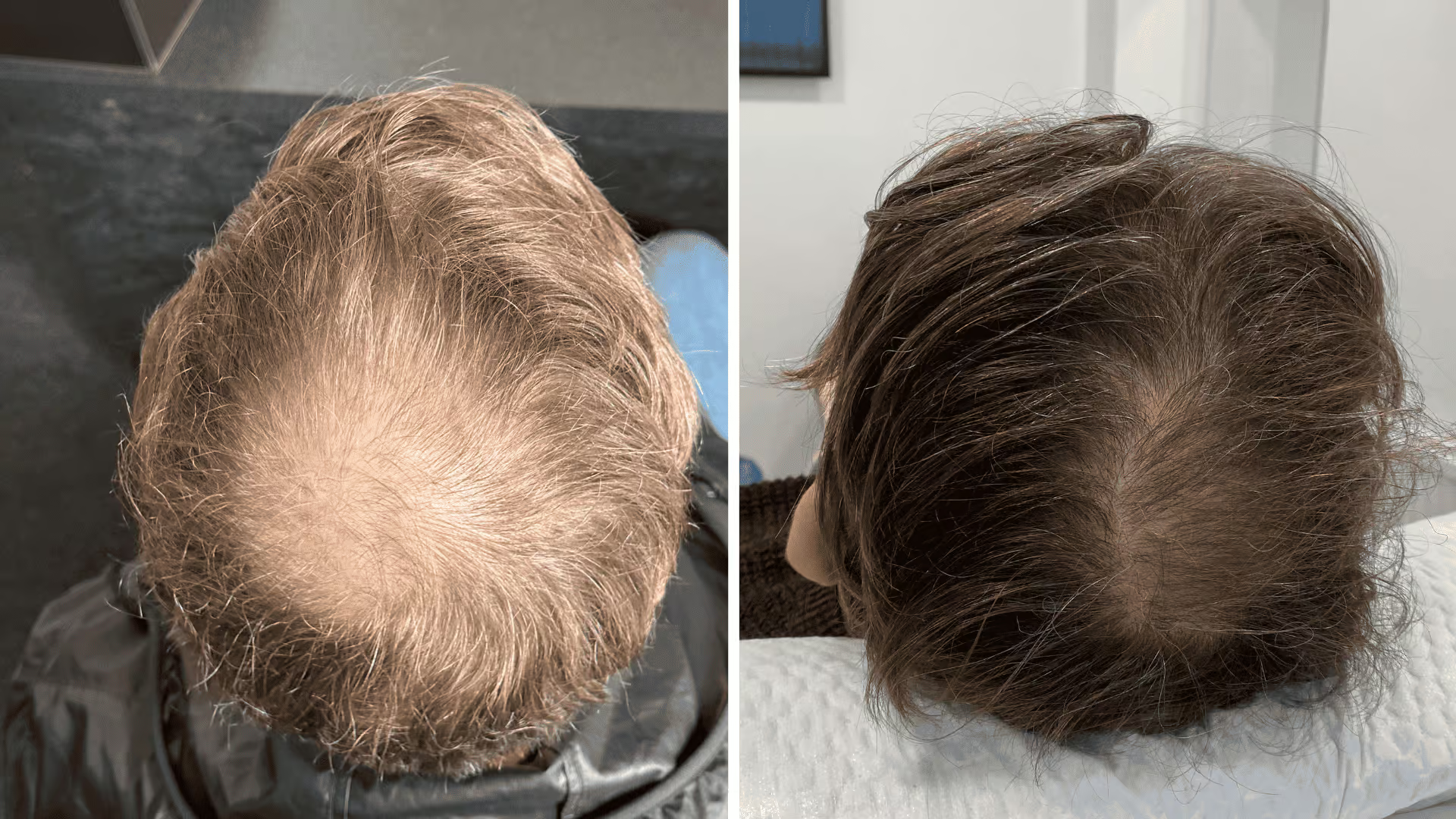
PRP hair treatment involves delivering platelet-rich plasma into selected areas of the scalp to support hair follicles.
The growth factors in PRP may influence follicular activity and the hair growth cycle. Some clinical evidence suggests that PRP can improve hair density in people with certain types of hair loss, particularly androgenetic alopecia, also known as pattern hair loss.
Potential benefits include:
- Reduced hair shedding in some patients.
- Improved hair density over time.
- Support for existing, weakened hair follicles.
- Improvement in the appearance of thinning areas.
PRP cannot reliably restore hair in areas where follicles have been permanently destroyed. It is also not a substitute for diagnosing the cause of hair loss. Nutritional deficiencies, hormonal conditions, scalp disorders, medication effects, and other medical factors may require different treatment approaches.
What Is PRP Hair Treatment, and Who Can Benefit From It?
PRP hair treatment is a non-surgical procedure that uses your own platelet-rich plasma to support hair growth in suitable patients.
It may be considered for adults experiencing early or moderate pattern hair loss, reduced hair density, or certain forms of non-scarring hair thinning. The decision should follow an assessment of the scalp, the pattern of hair loss, and possible underlying causes.
PRP may be less effective when hair loss is advanced or the follicles are no longer viable.
A consultation is particularly important if hair loss is sudden, patchy, associated with scalp inflammation, or accompanied by other symptoms. These signs can indicate conditions that require diagnosis and treatment before PRP is considered.
PRP may also be discussed alongside established hair-loss treatments when clinically appropriate. A practitioner should explain the expected contribution of each treatment rather than suggesting that PRP will work equally well for every patient.
What Is PRP Treatment for Face, and What Are Its Benefits?
PRP treatment for the face is an aesthetic procedure intended to improve selected aspects of skin quality by using platelet-rich plasma.
It may be considered for people concerned about mild fine lines, uneven texture, or a tired-looking appearance. Suitability depends on the condition being treated and the individual’s expectations.
PRP Treatment for Face Benefits
Potential benefits include:
- Skin texture: May help improve the appearance of uneven texture.
- Fine lines: May provide a subtle improvement in selected fine lines.
- Skin quality: May support collagen-related repair processes.
- Natural treatment material: Uses plasma prepared from the patient’s own blood.
- Minimal downtime for some patients: Recovery depends on the technique and individual skin response.
The results of PRP for the face are not equivalent to those of every other aesthetic procedure. It will not produce the same immediate lifting effect as some other treatments, and it cannot guarantee the removal of acne scars, pigmentation, or wrinkles.
What Happens During PRP Treatment for Face?
A typical appointment begins with cleansing the treatment area and collecting a blood sample. The sample is processed to prepare the PRP.
Depending on the treatment plan, the practitioner may inject the PRP into selected areas or apply it in combination with an appropriate skin procedure. The technique should be selected according to the patient’s needs, and any procedure that creates channels or breaks in the skin requires suitable infection-control measures.
Mild redness, swelling, tenderness, or pinpoint bleeding may occur after treatment. Your practitioner should provide specific aftercare instructions and explain when normal skincare products can be resumed.
How Many PRP Sessions Are Needed for Skin and Hair?
The number of PRP sessions depends on the treatment area, the underlying concern, and the individual’s response.
For hair loss, an initial course often involves around three sessions spaced approximately four to six weeks apart. Some patients may require additional sessions, followed by maintenance treatments if they respond well.
For facial skin concerns, a treatment plan may involve one to three or more sessions, commonly spaced several weeks apart. The number should be based on the skin concern and the practitioner’s assessment rather than a fixed package.
| Treatment | Typical initial approach | When to assess progress |
|---|---|---|
| PRP for hair | Often around 3 sessions, 4–6 weeks apart | Commonly after 3–6 months |
| PRP for face | Often 1–3 sessions, spaced several weeks apart | Over the following weeks to months |
| Maintenance PRP | Individualised according to response | At follow-up appointments |
These are general planning ranges, not a prescription or guarantee. Your practitioner may recommend a different schedule or decide that another treatment is more appropriate.
What Is the PRP Hair Treatment Success Rate?
There is no single PRP hair treatment success rate that applies to every patient.
Clinical research suggests that PRP can improve hair density in some people with androgenetic alopecia, but outcomes differ across studies and patients. Differences in preparation methods, platelet concentrations, injection techniques, session schedules, and outcome measurements make it difficult to give one reliable percentage for everyone.
Your likely response may depend on:
- The type and severity of hair loss.
- Whether hair follicles remain active.
- Your overall health and relevant medical conditions.
- The PRP preparation and treatment protocol.
- Whether other hair-loss treatments are needed.
Visible improvement generally takes months rather than days. Standardised photographs and follow-up assessments can help track changes more reliably than relying on daily observations.
A practitioner should discuss realistic expectations before treatment and explain what alternatives may be available if PRP is unlikely to provide meaningful improvement.
What Are the Side Effects of PRP Treatment?
PRP treatment is generally associated with temporary local side effects, but it is not risk-free.
Because the procedure uses your own blood, the risk of an allergic reaction to the plasma itself is relatively low. However, blood collection, injections, and skin procedures can still cause complications.
Possible side effects include:
- Redness and swelling at the treatment site.
- Tenderness, soreness, or a feeling of pressure.
- Bruising or small areas of bleeding.
- Temporary scalp sensitivity or headache after hair treatment.
- Infection if appropriate hygiene and sterile technique are not maintained.
- Rare injury to nearby structures or other complications associated with injections.
Facial PRP may cause temporary irritation or increased sensitivity, particularly when combined with procedures that affect the skin barrier.
Tell your practitioner about your medical history, medications, bleeding disorders, and any history of fainting during blood collection. Some medical conditions or blood-related abnormalities may make PRP unsuitable.
After treatment, follow the clinic’s instructions on washing, exercise, sun exposure, and skincare. Seek medical advice promptly if you develop worsening pain, spreading redness, increasing swelling, fever, or other symptoms that suggest a complication.
What Is the PRP Treatment Cost in Lahore, Pakistan?
PRP treatment cost in Lahore varies according to the treatment area, number of sessions, preparation method, clinic facilities, and practitioner expertise.
There is no single standard PRP treatment price in Pakistan. Facial PRP and PRP for hair may also be priced differently because the treatment areas and protocols are not identical.
The following factors commonly influence the final quote:
- Treatment area: PRP for the face, scalp, or multiple areas may have different fees.
- Number of sessions: A multi-session course generally costs more overall than one appointment.
- Preparation method: Equipment, processing protocols, and the use of appropriate sterile supplies can affect pricing.
- Practitioner and clinic: Professional expertise, assessment, and clinical facilities contribute to the cost.
- Additional procedures: Combining PRP with another treatment may change the total price.
PRP Hair Treatment Cost and Price in Pakistan
The cost of PRP hair treatment depends on the number of sessions recommended and the severity of hair thinning. When comparing prices, ask whether the quoted amount covers one session or a complete course.
PRP Treatment for Face Price
The price of PRP treatment for the face depends on the technique, treatment area, and whether PRP is performed alone or alongside another procedure. Ask for a breakdown of the consultation, treatment, and any follow-up fees.
Aesta Aesthetics can discuss suitable options during a consultation in Lahore. Contact the clinic directly for current pricing rather than relying on general online estimates that may not reflect the exact procedure or treatment plan.
Is PRP Treatment Better Than Other Skin and Hair Treatments?
PRP may be useful for selected concerns, but it is not automatically better than established alternatives.
For hair loss, options may include topical minoxidil, prescription treatments where appropriate, and other medical or surgical approaches. The right choice depends on the diagnosis, health history, and treatment goals.
For facial skin concerns, options may include medical-grade skincare, microneedling, selected laser treatments, or other clinician-recommended procedures. Each has a different mechanism, level of evidence, recovery period, and risk profile.
PRP is worth discussing when you want to understand whether a treatment using your own blood may suit your concern. It should be compared with realistic alternatives rather than judged by marketing claims alone.
For people considering PRP treatment in Lahore, a personalised assessment can help determine whether the potential benefits justify the cost, time, and recovery involved.
Frequently Asked Questions About PRP Treatment
Is PRP treatment painful?
PRP may cause discomfort during blood collection and injections. The level of discomfort varies by treatment area, technique, and individual sensitivity. Your practitioner can explain available comfort measures before the procedure.
How long do PRP results last?
The duration of results varies. Hair improvements may require maintenance sessions, while changes in skin quality can gradually diminish as the skin continues to age. Your practitioner can recommend follow-up based on your response.
Can PRP treat severe hair loss?
PRP is generally more suitable for selected cases of hair thinning where viable follicles remain. It is unlikely to restore hair reliably in areas with extensive, permanent follicular loss. A proper diagnosis is essential before treatment.
Is PRP safe for all skin types?

PRP may be considered for people with different skin types, but suitability depends on medical history, the treatment method, active skin conditions, and other risk factors. A consultation is necessary before proceeding.
Can PRP be combined with other treatments?
Yes, PRP may sometimes be combined with other treatments for skin or hair. However, the combination, sequence, and timing should be determined by a qualified practitioner based on the patient’s needs and the safety of each procedure.
When should I avoid PRP treatment?
PRP may be unsuitable for some people with certain blood disorders, low platelet counts, active infections, or other medical conditions. Some medications and health factors may also affect suitability. Share your complete medical history with your practitioner before treatment.
Book a PRP Consultation at Aesta Aesthetics
If you are considering PRP for skin and hair, the first step is to understand the cause of your concern and whether the treatment is suitable for you.
Aesta Aesthetics in Lahore can help you explore your options, understand the likely benefits and limitations, and discuss a treatment plan based on your needs. Contact the clinic to arrange a consultation and ask about current PRP treatment pricing.
Reviewed by Dr. Nasba Safdar, Aesta Aesthetics
Disclaimer: Results vary by individual, and this information is not a substitute for a personalised medical consultation.